
Discover what is mortgage refinancing explained in simple terms. Learn how to save money, improve your loan terms, and access home equity.
Mortgage Loan Estimate Explained for First-Time Buyers
A mortgage loan estimate is a standardized, three-page document that shows the estimated costs and key terms of a mortgage you applied for. Federal law requires lenders to deliver this form within 3 business days of receiving your completed application. Officially called the Loan Estimate, this document is mandated under the TRID rule, which stands for TILA-RESPA Integrated Disclosure. Its purpose is to help you understand mortgage loan estimate details clearly and compare offers from multiple lenders on equal footing. Every lender uses the same standardized format, which makes side-by-side comparison straightforward and fair.
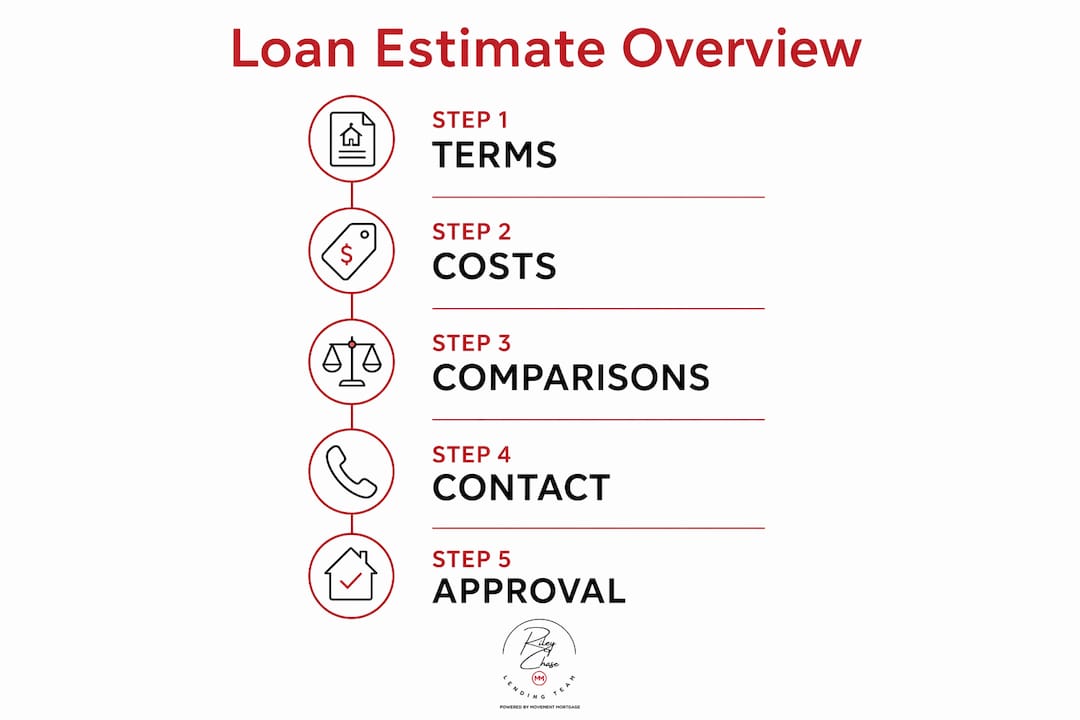
What are the main components of the Loan Estimate?
The Loan Estimate is organized across three pages, each serving a distinct purpose. Knowing what each page covers helps you read mortgage estimates without confusion.
Page 1: loan terms and monthly payment
Page 1 gives you the big picture. It shows your loan amount, interest rate, and projected monthly payment. It also tells you whether your interest rate, monthly payment, or loan balance can increase over time. This is the first place to check if you have an adjustable-rate loan, since the form will flag potential payment changes clearly.

The monthly payment shown on page 1 includes principal and interest. It does not always include taxes and insurance at this stage. You will find those costs broken out further in the document.
Page 2: the full cost breakdown
Page 2 is where the mortgage estimate breakdown gets detailed. Costs are divided into four categories:
- Origination Charges: Fees the lender charges directly, including processing and underwriting. These typically range between 0.5% and 1% of your total loan amount.
- Services You Cannot Shop For: Third-party services the lender selects, such as the appraisal and credit report. You pay these fees but cannot choose the provider.
- Services You Can Shop For: Services like title insurance and settlement agent fees where you can choose your own provider and potentially lower costs.
- Taxes and Other Government Fees: Recording fees and transfer taxes set by local governments.
Pro Tip: Review the “Services You Can Shop For” section carefully. Choosing a lower-cost title company or settlement agent from the lender’s approved list can save you hundreds of dollars at closing.
Page 3: the comparison tools you actually need
Page 3 is the most underused part of the form. It contains the 5-year cost projection and APR, which factor in fees and points to give you a complete cost picture. The APR is almost always higher than the interest rate because it includes lender fees. The 5-year projection shows the total amount you will pay in principal, interest, and fees over the first five years of the loan. These two numbers are your best tools for comparing offers objectively.
Page 3 also includes the lender’s contact information and your loan officer’s name. Keep this page. You will need it if questions arise before closing.
How do you interpret fees and payments on the Loan Estimate?
Reading the numbers correctly is where most first-time buyers gain a real advantage. A few focused habits make the difference between a good deal and an expensive mistake.
-
Start with the total projected monthly payment. The total monthly payment is the key figure for budgeting and underwriting, not just the interest rate. This number includes principal, interest, estimated property taxes, homeowner’s insurance, and private mortgage insurance if applicable. It is the figure that determines whether you can afford the loan month to month.
-
Do not compare interest rates in isolation. Two loans with the same interest rate can have very different total costs if one includes discount points or higher origination fees. Always look at the APR and the 5-year projection together.
-
Check origination charges for accuracy. Origination fees have zero tolerance under federal rules. That means they cannot increase between the Loan Estimate and your Closing Disclosure unless a qualifying changed circumstance occurs. If you see a discrepancy later, the lender must cover the difference.
-
Understand what “shoppable” means for your wallet. Services you can shop for carry a 10% aggregate tolerance limit. That means the total of those fees can increase by no more than 10% from estimate to closing if you use the lender’s suggested providers. If you choose your own provider, cost certainty may vary, so get quotes before deciding.
-
Watch for junk fees. Look for vague line items in origination charges, such as “administrative fee” or “document preparation fee.” Ask your lender to explain each one. Legitimate lenders answer these questions without hesitation.
Pro Tip: If a fee label is unclear, ask the lender to define it in writing before you proceed. Ambiguous fees are the most common source of closing day surprises.
How do you compare multiple Loan Estimates effectively?
Comparing offers is the single most powerful step you can take as a buyer. The Loan Estimate form exists precisely to make this comparison possible.
Request Loan Estimates from at least three lenders on the same day. Interest rates change daily, so same-day requests give you an accurate comparison. Use these specific data points to evaluate each offer:
- Section A origination fees: This is the lender’s direct cost to you. Lower is better, all else being equal.
- Total projected monthly payment: Found on page 1. This is your real monthly obligation.
- 5-year cost projection: Found on page 3. This shows which loan costs less over the first five years.
- APR: A higher APR relative to the interest rate signals more fees built into the loan.
- Cash to close: The total amount you need to bring to the closing table.
The table below shows how to organize your comparison across three lenders:
| Comparison Point | What to look for |
|---|---|
| Section A origination fees | Lower fees mean less upfront cost from the lender |
| Total projected monthly payment | Must fit your monthly budget and debt-to-income ratio |
| 5-year cost projection | Reveals true long-term cost including fees and points |
| APR vs. interest rate gap | A large gap signals higher lender fees embedded in the loan |
| Cash to close | Confirms total funds needed at closing |
Pro Tip: Once you have competing Loan Estimates in hand, share them with each lender. Many lenders will match or beat a competitor’s origination fees when they see a written offer. You have more negotiating power than you think.
Reviewing mortgage terms before you start shopping helps you read each estimate faster and ask better questions.
What happens after the Loan Estimate before closing?
The Loan Estimate is not a final contract. It is a best estimate designed for transparency, and the actual binding numbers appear in your Closing Disclosure. Federal law requires lenders to deliver the Closing Disclosure at least three business days before you sign. That three-day window exists so you have time to review and raise concerns.
Several situations can trigger a revised Loan Estimate before closing:
- You request a different loan product or term.
- The property appraisal comes in significantly different from the estimated value.
- Your financial situation changes materially after application.
- A natural disaster or other extraordinary event affects the property.
Tolerance rules protect you from unexpected cost increases. Here is how they work:
- Zero tolerance: Lender origination charges and fees for required services where you cannot shop cannot increase at all. If they do, the lender must cover the excess.
- 10% aggregate tolerance: Certain third-party fees can increase in total by no more than 10%.
- No tolerance limit: Prepaid items like homeowner’s insurance and property tax escrow can change without restriction because they are set by third parties.
When your Closing Disclosure arrives, compare it line by line to your original Loan Estimate. Flag any fee that increased in a zero-tolerance category. Contact your lender immediately if you find a discrepancy.
If a zero-tolerance fee increased without a valid changed circumstance, federal rules require the lender to credit you the difference at closing. You do not have to accept an unexplained cost increase. Knowing your rights here can save you real money.
Getting pre-approved early in the process gives you a clearer picture of your budget before Loan Estimates even arrive, which makes the comparison process far less stressful.
Key Takeaways
The most effective way to use a Loan Estimate is to compare total projected monthly payments and 5-year cost projections across at least three lenders, not just interest rates.
| Point | Details |
|---|---|
| Delivery timeline | Lenders must provide the Loan Estimate within 3 business days of your application. |
| Page 3 comparison tools | Use the APR and 5-year cost projection to compare total loan costs across lenders. |
| Zero-tolerance fees | Origination charges cannot increase at closing without a valid changed circumstance. |
| Shoppable services | Choosing your own title or settlement provider can reduce closing costs. |
| Closing Disclosure review | Compare the Closing Disclosure line by line to your Loan Estimate before signing. |
What I have learned from watching buyers read Loan Estimates
Most first-time buyers I work with focus on the interest rate on page 1 and stop there. That instinct is understandable. The interest rate is the number lenders advertise most prominently. But the rate alone tells you almost nothing about the true cost of the loan.
The number that actually matters for your daily life is the total projected monthly payment. It includes taxes, insurance, and PMI if applicable. That is the figure your lender uses to calculate your debt-to-income ratio, and it is the figure that determines whether you can comfortably afford the home. I have seen buyers choose a loan with a slightly lower rate but a higher monthly payment because they did not account for escrow differences.
Page 3 is where I always tell buyers to spend extra time. The 5-year cost projection is a genuinely useful number. It lets you compare a loan with a lower rate but higher fees against one with a higher rate but lower fees. Over five years, the math often surprises people. A loan that looks cheaper on page 1 can cost thousands more when you factor in points and origination charges.
My strongest advice: ask questions before you feel pressured to decide. A good lender welcomes questions about every line item. If a fee is vague or a number changed without explanation, say so. You have federal protections behind you, and the Closing Disclosure gives you a final three-day window to catch errors. Use it.
— Riley
Rileychase is here to help you read and compare your Loan Estimates
Sorting through mortgage paperwork on your own can feel like a lot. Rileychase makes the process clearer by pairing you with a knowledgeable loan officer who walks you through every line of your Loan Estimate, explains what each fee means, and helps you compare offers with confidence.
Whether you are ready to get pre-approved or still weighing your loan options, Rileychase provides the personalized guidance first-time buyers need to make informed decisions. Transparent communication and educational support are at the core of how Rileychase works. Reach out today and get clarity on your mortgage before you sign anything.
FAQ
What is a Loan Estimate in a mortgage?
A Loan Estimate is a standardized three-page form that federal law requires lenders to provide within 3 business days of receiving your mortgage application. It shows your estimated interest rate, monthly payment, and closing costs.
How do I read the mortgage estimate breakdown on page 2?
Page 2 divides costs into origination charges, services you cannot shop for, services you can shop for, and taxes or government fees. Focus on origination charges and shoppable services, since those are the fees most open to comparison and negotiation.
Can fees increase between the Loan Estimate and closing?
Some fees can increase and some cannot. Lender origination charges have zero tolerance and cannot increase without a valid changed circumstance. Certain third-party fees can increase by up to 10% in aggregate.
What is the difference between APR and interest rate on a Loan Estimate?
The interest rate is the cost of borrowing the principal. The APR includes the interest rate plus lender fees and points, making it a more complete measure of the loan’s total cost.
How many Loan Estimates should I request?
Request Loan Estimates from at least three lenders on the same day. Same-day requests give you an accurate comparison because mortgage rates change daily.
Recommended
- Demystifying the Mortgage Approval Process: A Step-by-Step Guide for First-Time Homebuyers – Movement Mortgage
- Mortgage Terms Every Buyer Knows: First-Timer’s Guide
- How to Use a Mortgage Calculator to Plan Your Home Purchase – Movement Mortgage
- Understanding Your Mortgage Calculator Results – Movement Mortgage

Related Posts