
Discover why investor mortgage rates are higher. Learn about the risks that affect loan costs and how to negotiate better terms.
Mortgage Pre-Approval Process Guide for First-Time Buyers
What mortgage pre-approval means and why it matters
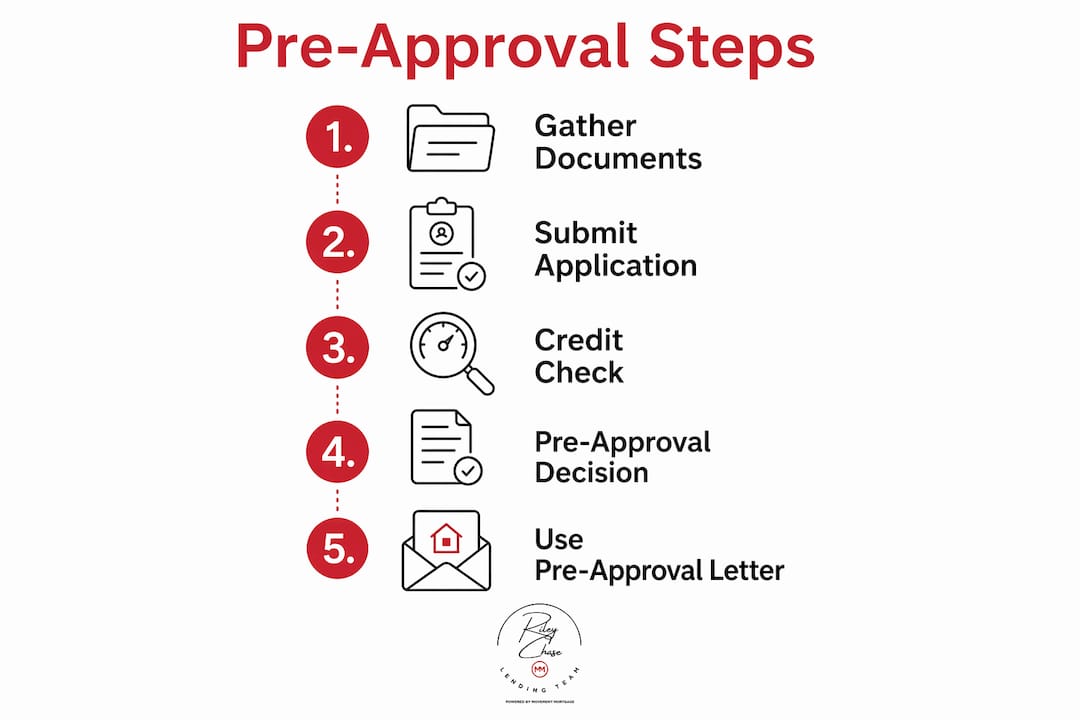
Mortgage pre-approval is a lender’s conditional commitment stating how much you may be able to borrow, based on a verified review of your income, assets, debts, and credit history. It is not a guaranteed loan offer, but it is far more meaningful than a casual estimate. Mortgage pre-approval is a common step, with 94% of mortgage buyers obtaining a pre-approval letter before proceeding with a home purchase, making it an industry standard that sellers often expect.
The benefits of mortgage pre-approval go beyond paperwork. You walk into every showing knowing your real budget, you make offers with confidence, and sellers take you seriously from the start. Pre-approval also uncovers financial red flags early, giving you time to fix credit errors or pay down debt before they derail a deal. The Rileychase Lending Team guides buyers through this phase with personalized support, so nothing catches you off guard.
- Realistic budget: You know your borrowing ceiling before you fall in love with a house.
- Seller credibility: Most sellers won’t accept an offer without a pre-approval letter; 94% of mortgage buyers reported getting pre-approved before proceeding.
- Faster closing: Lenders have already verified your finances, so the process moves quicker.
- Early problem detection: Issues surface now, not the week before closing.
Table of Contents
- Your step-by-step mortgage pre-approval process guide
- Pre-qualification vs. pre-approval: what’s the real difference?
- What documents do lenders need for pre-approval?
- How long does a pre-approval letter last?
- What to do if your pre-approval is denied or hits a snag
- How lenders assess your creditworthiness
- What does pre-approval cost?
- How pre-approval strengthens your offer
- How to keep your pre-approval intact while you search
- Rileychase makes the pre-approval process clear and personal
- Key Takeaways
Your step-by-step mortgage pre-approval process guide
Getting pre-approved follows a clear sequence. Work through each step deliberately, and the whole process feels manageable.
-
Check your credit score and credit report. Pull your reports from all three bureaus (Equifax, Experian, and TransUnion) at AnnualCreditReport.com. Dispute any errors before you apply, because mistakes on your report can lower your score and shrink your borrowing power.
-
Calculate your debt-to-income ratio (DTI). Add up your monthly debt payments and divide by your gross monthly income. Most lenders prefer a DTI below 43%, though some loan programs allow higher ratios with compensating factors.
-
Gather your financial documents. Collect pay stubs, W-2s, two years of tax returns, bank statements, and a list of your current debts. Self-employed buyers typically need profit and loss statements as well. Having everything ready before you apply prevents delays.
-
Shop multiple lenders. Apply to at least two or three lenders to compare rates and terms. Multiple credit pulls within 45 days count as a single inquiry on your credit report, so rate shopping does not hurt your score the way many buyers fear.
-
Submit your application. Each lender will conduct a hard credit pull and verify your documents. Lenders check income, assets, debts, and credit history to determine your borrowing limit and the rate you qualify for.
-
Receive your pre-approval letter. If approved, you get a letter stating the loan amount, loan type, and expiration date. Bring this letter to every showing and include it with every offer.
-
Stay financially stable. Do not open new credit accounts, make large purchases, or change jobs between pre-approval and closing. Any of those moves can trigger a re-review.
Pro Tip: Experts recommend getting pre-approved about 90 days before you start actively house hunting. That window gives you time to fix credit issues, compare lenders, and shop without pressure.
Pre-qualification vs. pre-approval: what’s the real difference?
Many buyers use these terms interchangeably, but they are not the same thing, and the difference matters when you are making a serious offer.
Pre-qualification relies on self-reported data and typically involves no credit check. A lender gives you a rough estimate of what you might borrow based on numbers you provide. It takes minutes, but it carries little weight with sellers because nothing has been verified.
Pre-approval is a formal process. The lender pulls your credit, reviews your documents, and issues a conditional commitment. That verification is what gives the letter its credibility. Here is how the two compare:
- Pre-qualification: Self-reported income and debts, no hard credit pull, rough estimate only, not accepted by most sellers as proof of financing ability.
- Pre-approval: Verified income, assets, and debts, hard credit pull required, specific loan amount stated, widely accepted by sellers and real estate agents.
- Negotiating position: A pre-approval letter signals to sellers that your financing is likely to come through. A pre-qualification letter does not.
- Document requirements: Pre-qualification needs little to nothing in writing. Pre-approval requires pay stubs, tax returns, bank statements, and ID.
If you are serious about buying, skip straight to pre-approval. You can learn more about getting pre-qualified as a starting point, but pre-approval is what moves deals forward.
What documents do lenders need for pre-approval?
Preparation is the single biggest factor in how smoothly your pre-approval goes. Common required documents include proof of income, asset verification, debt information, and identification. Here is a practical checklist:
- Government-issued ID: Driver’s license or passport, plus your Social Security number.
- Proof of income: Recent pay stubs (last 30 days), W-2 forms, and federal tax returns for the past one to two years.
- Bank and asset statements: Two to three months of bank statements, plus retirement or investment account statements.
- Debt information: Balances and monthly payments for credit cards, auto loans, student loans, and any child or spousal support obligations.
- Self-employment documents: Profit and loss statements, business tax returns, and a CPA letter if applicable.
- Gift letters: If part of your down payment is a gift, the donor must provide a signed letter confirming it does not need to be repaid.
- Explanation letters: Any recent large deposits or credit inquiries may require a brief written explanation.
Rileychase recommends organizing these documents into a single digital folder before you contact any lender. That one step alone can cut days off the process.
How long does a pre-approval letter last?
Pre-approval letters typically remain valid for 30–90 days, depending on the lender. Once the letter expires, you need to reapply, which means another credit check and updated documentation.
Timing your pre-approval to your house hunt matters. Apply too early and the letter expires before you find a home. Apply too late and you are scrambling to get paperwork together while competing with buyers who are already ready. The 90-day window recommended by industry experts gives you a practical buffer.
Life changes can also affect your standing even before the letter expires. A job change, a new car loan, or a large cash deposit can prompt a lender to re-evaluate your file. The Consumer Financial Protection Bureau notes that pre-approval can be revoked before closing if your financial profile shifts. Treat your pre-approval period as a financial freeze: keep your income stable, your debts steady, and your bank balances consistent.
For a broader look at how mortgage approvals work in other markets, this mortgage approval guide from Alberta offers useful regional context on lender expectations.
What to do if your pre-approval is denied or hits a snag
Denial is not the end of the road. It is feedback, and most of the common reasons are fixable.
- Low credit score: Request the score the lender used. If it is below their threshold, focus on paying down revolving balances and avoiding new inquiries for three to six months.
- Credit report errors: Dispute inaccurate items directly with the credit bureaus. The CFPB advises asking the lender to explain exactly which factor triggered the denial.
- High DTI ratio: Pay off smaller debts first to reduce your monthly obligations, or look for loan programs with more flexible DTI limits.
- Recent large deposits: Unexplained deposits raise underwriting flags. Document the source of any large transfer before you reapply.
- Differing lender criteria: One lender’s denial does not mean every lender will say no. Underwriting guidelines vary, so applying elsewhere is a reasonable next step.
If you need help improving your credit before reapplying, HUD-approved housing counseling agencies offer free guidance. You can find one at HUD.gov or by calling 1-800-569-4287. The Rileychase Lending Team can also walk you through your specific situation and help you build a plan.
How lenders assess your creditworthiness
Lenders look at three core factors during pre-approval: your credit score, your debt-to-income ratio, and your employment history.
Your credit score signals how reliably you have managed debt. Most conventional loans require a minimum score of 620, while FHA loans can go lower. A higher score typically means a lower interest rate. Your DTI ratio tells lenders how much of your monthly income is already committed to debt payments. Keep it below 43% for the best approval odds, though some programs accept higher ratios. Employment verification confirms that your income is stable and likely to continue. Lenders want to see at least two years of consistent employment in the same field, or a clear upward trajectory if you have changed jobs.

What does pre-approval cost?
Many lenders offer pre-approval at no charge, but some charge an application fee that may range from a modest amount to a few hundred dollars depending on the lender and loan type. The hard credit pull required during pre-approval has a minor, temporary effect on your credit score. Because multiple pulls within 45 days count as one inquiry, shopping several lenders in a short window keeps that impact minimal. Always ask each lender upfront whether they charge an application fee and whether it is refundable if you choose not to proceed.
How pre-approval strengthens your offer
A pre-approval letter changes how sellers see you. You are no longer a hopeful buyer; you are a qualified one. In competitive markets, sellers often receive multiple offers simultaneously, and an offer without pre-approval is frequently passed over regardless of price. Pre-approval also gives you a clear ceiling, which prevents you from making offers you cannot actually finance. The Consumer Financial Protection Bureau advises waiting until after you have made an offer to choose your final lender, since the pre-approval letter itself does not lock you into any one institution. Compare official loan estimates from multiple lenders once your offer is accepted to find the best rate and terms.
How to keep your pre-approval intact while you search
Protecting your pre-approval status during the house hunt comes down to one principle: do not change your financial picture.
- Avoid opening new credit cards or taking on new loans.
- Do not make large purchases on existing credit accounts.
- Keep your employment and income stable.
- Avoid moving large sums of money between accounts without documentation.
- Check in with your lender if your letter is approaching its expiration date.
- Review common post-approval mistakes so you know exactly what to avoid.
Small financial moves that feel routine can look like red flags to an underwriter. When in doubt, ask your lender before you act.
Rileychase makes the pre-approval process clear and personal
Getting pre-approved is one of the most confidence-building steps in buying a home, and you should not have to figure it out alone.

Rileychase specializes in guiding first-time buyers and experienced investors through the entire home financing process, from that first credit check to closing day. Unlike a generic online application that leaves you waiting for an automated response, the Rileychase Lending Team offers personalized communication, transparent explanations of your options, and real guidance on loan types including fixed-rate, adjustable-rate, FHA, and VA loans. You get a clear picture of your budget and a stronger position in any market. Ready to take the first step? Start your pre-approval with Rileychase today and walk into your home search with real confidence.
Key Takeaways
Getting pre-approved at least 90 days before house hunting gives you time to fix credit issues, compare lenders, and enter the market as a fully prepared buyer.
| Point | Details |
|---|---|
| Pre-approval vs. pre-qualification | Pre-approval requires verified documents and a hard credit pull; pre-qualification does not carry the same weight with sellers. |
| Letter validity | Pre-approval letters last 30–90 days; expired letters require reapplication with updated credit checks. |
| Shopping multiple lenders | Applying to several lenders within 45 days counts as one credit inquiry, protecting your score while you compare rates. |
| Financial stability matters | Job changes, new debts, or large deposits can revoke pre-approval before closing, so keep your finances steady. |
| Rileychase guidance | Rileychase provides personalized pre-approval support for first-time buyers, covering FHA, VA, fixed-rate, and adjustable-rate loan options. |
Recommended
- Demystifying the Mortgage Approval Process: A Step-by-Step Guide for First-Time Homebuyers – Movement Mortgage
- Getting Pre-Approved for a Home Loan – Movement Mortgage
- How to Get Preapproved for a Mortgage – Movement Mortgage
- How to Navigate the Homebuying Process: A Step-by-Step Guide for First-Time Buyers – Movement Mortgage

Related Posts