
Discover why investor mortgage rates are higher. Learn about the risks that affect loan costs and how to negotiate better terms.
Best Linnworks Alternatives for Ecommerce Sellers in 2026
What are the top Linnworks alternatives for US ecommerce inventory management?
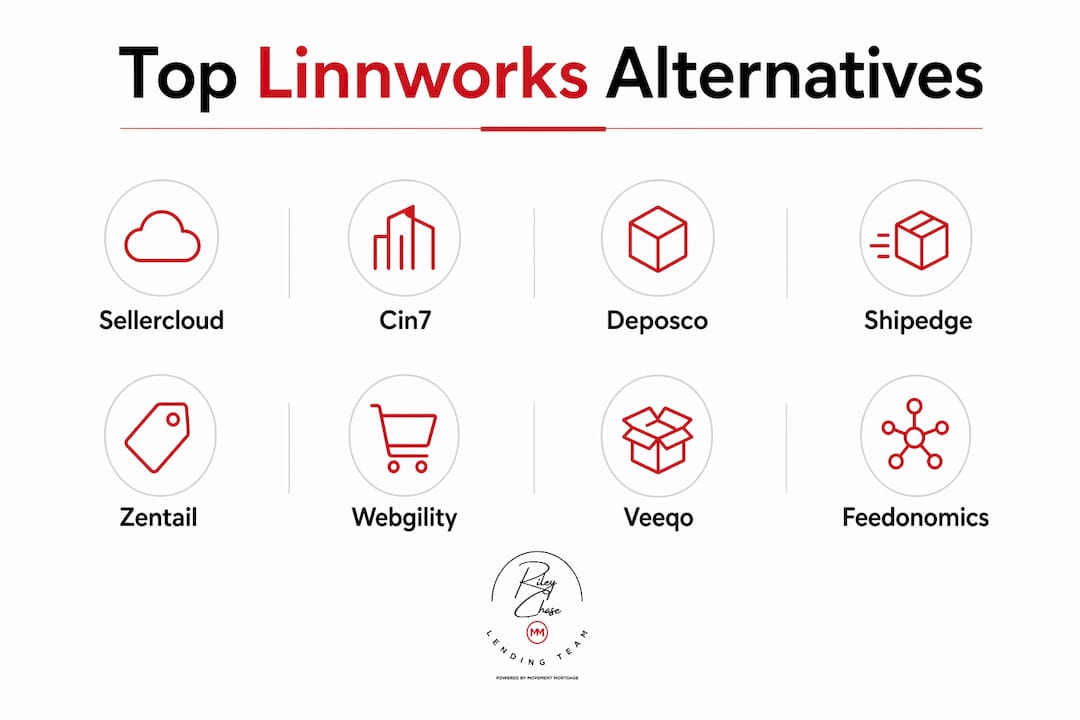
Sellercloud, Cin7, Deposco, Shipedge, Zentail, Webgility, Veeqo, and Feedonomics are the strongest Linnworks alternatives available to US ecommerce sellers in 2026. Each one addresses a distinct gap that Linnworks leaves open, whether that’s AI-driven pricing, warehouse automation, or accounting integration. The right choice depends on your channel mix, business size, and how tightly you need your inventory system to connect with platforms like Shopify, Amazon, and eBay.
| Platform | Best For | Key Features | Pricing | Integration Capabilities |
|---|---|---|---|---|
| Sellercloud | Multichannel retailers needing automation | Order routing, reporting, catalog sync | Custom quote | Shopify, Amazon, eBay, Walmart, 200+ channels |
| Cin7 | All-in-one inventory, POS, and fulfillment | POS, 3PL, warehouse management | Starts at $349/mo | Shopify, WooCommerce, Amazon, Xero |
| Deposco | Large businesses with complex fulfillment | Compliance tools, scalable OMS | Enterprise pricing | Major ERP, WMS, and ecommerce platforms |
| Shipedge | Warehouse automation and shipping | Multi-carrier shipping, WMS | Custom quote | Amazon, Shopify, eBay, FedEx, UPS |
| Zentail | AI-driven pricing and listing management | Dynamic repricing, SMART types | Custom quote | Amazon, Walmart, Google Shopping |
| Webgility | Ecommerce and accounting integration | QuickBooks sync, order automation | Starts at $59/mo | Shopify, Amazon, QuickBooks, Xero |
| Veeqo | Multichannel shipping and inventory | Global carrier support, bulk shipping | Free (Amazon sellers) | Amazon, eBay, Shopify, USPS, FedEx |
| Feedonomics | Product feed optimization | Feed management, listing optimization | Custom quote | Google Shopping, Amazon, Facebook |
Veeqo stands out immediately for Amazon sellers because it is free to use, funded directly by Amazon. Webgility is the most accessible entry point for smaller operations already using QuickBooks. Deposco and Sellercloud sit at the enterprise end, built for sellers managing thousands of SKUs across many channels.

How do these platforms compare on features, pricing, and support?
Choosing among these eight platforms is less about finding the “best” one and more about finding the right fit for your specific operation. Here is a closer look at what separates them.

Sellercloud handles multichannel complexity at scale. Its order routing logic automatically directs orders to the right warehouse or fulfillment partner, and its catalog management keeps product data consistent across more than 200 sales channels. Sellers running high-volume operations on Amazon, Walmart, and their own Shopify store simultaneously find that Sellercloud reduces the manual work of keeping everything in sync. Pricing is custom, so you will need to request a demo to get a quote.
Cin7 is the most complete all-in-one option on this list. It combines inventory management, a built-in point-of-sale system, and third-party logistics (3PL) support in a single platform. Retailers who sell both online and in physical locations get the most value here, since Cin7 eliminates the need for a separate POS tool. Plans start at $349 per month, which positions it as a mid-market solution rather than a budget pick.
Deposco targets large ecommerce operations where compliance and scalability are non-negotiable. Its Bright Suite platform connects order management, warehouse management, and fulfillment in one environment, with particular strength in meeting US regulatory requirements for inventory tracking. Gartner peer reviews highlight its configurability for complex fulfillment workflows. Pricing is enterprise-tier and available only through direct sales.
“Shipedge has transformed our warehouse operations. The multi-carrier shipping automation alone saved us hours every week, and the inventory accuracy improved dramatically once we connected it to our Shopify store.” — Verified G2 reviewer
Shipedge focuses tightly on warehouse and shipping workflow automation. Where other platforms treat shipping as one feature among many, Shipedge builds its entire product around it. Multi-carrier rate shopping, pick-and-pack workflows, and real-time carrier tracking are all core, not add-ons. G2 reviewers consistently cite the warehouse automation as the platform’s strongest differentiator.
Zentail takes a different approach by putting AI at the center of its product. Its SMART Types feature automatically maps your product catalog to the correct category and attribute structure on each marketplace, which eliminates one of the most tedious parts of multichannel selling. Dynamic repricing adjusts your prices in real time based on competitor data. Capterra reviews note that the onboarding learning curve is real, but sellers who push through it report meaningful gains in listing accuracy.
Webgility solves a specific and common pain point: keeping your ecommerce sales data in sync with QuickBooks or Xero. Every order, refund, and fee posts automatically to your accounting software, which means your books stay current without manual data entry. At $59 per month for the entry plan, it is the most affordable option on this list for small to mid-size sellers. The trade-off is that Webgility is not a full inventory management system; it is best used alongside a dedicated inventory tool.
Veeqo is free for Amazon sellers, which makes it an obvious starting point for anyone already selling on Amazon who needs centralized shipping and inventory control. It supports global carriers including USPS, FedEx, UPS, and DHL, and it syncs inventory across Amazon, eBay, and Shopify simultaneously. The free pricing model is sustainable because Amazon subsidizes the platform in exchange for sellers using Amazon-discounted shipping rates.
Feedonomics operates in a specialized niche: product data feed management. Rather than managing orders or warehouse operations, it focuses on making sure your product listings are accurate, complete, and optimized on every marketplace and ad channel where you sell. For sellers running Google Shopping campaigns or selling on Facebook Marketplace alongside Amazon, feed quality directly affects ad performance and conversion rates. G2 competitor analysis places Feedonomics among the top tools for marketplace listing optimization.
Security and compliance vary meaningfully across these platforms. Deposco leads on compliance tooling for US ecommerce regulations. Sellercloud and Cin7 both offer role-based access controls and audit trails. Webgility’s accounting sync creates a natural compliance record for financial reporting. If your business handles sensitive customer data at scale, verify each vendor’s SOC 2 certification status before committing.
Trial availability also differs. Cin7 and Webgility offer free trials. Sellercloud, Deposco, Shipedge, Zentail, and Feedonomics all require a demo call before you can evaluate the product hands-on. Veeqo is free to start, so there is no trial barrier at all.
Pro Tip: Before your demo call with any enterprise vendor, prepare a list of your top three integration requirements and your current monthly order volume. Vendors will tailor their pitch to your situation, and you will get far more useful information than from a generic walkthrough.
How to select the right Linnworks alternative for your business
The platform that fits a 50-order-per-day Shopify seller is rarely the right choice for a 5,000-order-per-day multichannel operation. Start by mapping your actual needs before evaluating features.
Critical evaluation criteria to work through:
- Channel coverage: Does the platform natively connect to every marketplace where you sell? Shopify, Amazon, and eBay are table stakes. Walmart, TikTok Shop, and Google Shopping matter if you sell there.
- Accounting integration: If you use QuickBooks or Xero, Webgility or Cin7 will save you significant reconciliation time. Other platforms offer accounting connectors, but none as tightly as Webgility.
- Warehouse complexity: Sellers with a single fulfillment location need far less than those running multiple warehouses or using 3PL partners. Shipedge and Deposco are built for the latter.
- Pricing model fit: Per-order pricing scales with volume but can get expensive fast. Flat monthly pricing is more predictable. Understand the total cost of ownership, including integration fees and onboarding costs, before signing.
- Customer support responsiveness: Check whether your plan includes phone support or only email and chat. For high-volume sellers, downtime during peak periods like Q4 is costly, and slow support compounds the damage.
- Ease of onboarding: Zentail and Deposco have steeper learning curves. Webgility and Veeqo are faster to set up. Match the complexity of the tool to the technical capacity of your team.
A practical testing approach:
- Shortlist two or three platforms based on your channel and integration requirements.
- Request demos from each, using your real order volume and SKU count as the basis for the conversation.
- Run a free trial where available, or ask for a pilot period with limited data before full commitment.
- Evaluate support quality during the trial by submitting a test support ticket and measuring response time and resolution quality.
- Calculate total annual cost including base subscription, integration fees, and any per-order charges.
Pricing model impact on ROI is worth thinking through carefully. A platform that costs $500 per month but eliminates 20 hours of manual work per week pays for itself quickly at any reasonable labor rate. Conversely, a cheap tool that requires constant manual correction can cost more in staff time than a pricier automated alternative.
Pro Tip: Ask every vendor for a reference customer in your industry and at your order volume. A reference call with a peer seller will surface real-world limitations that no demo will reveal.
What do user reviews reveal about these platforms?
User reviews across G2 and Capterra point to a consistent pattern: the platforms that earn the highest satisfaction scores are the ones that deliver on their core promise without overcomplicating the experience.
Sellercloud users on Capterra frequently praise its reporting depth and the breadth of its channel integrations, but some note that the interface takes time to learn. Cin7 earns strong marks for its all-in-one approach, with reviewers particularly appreciating that they no longer need separate tools for POS and inventory. Deposco’s Gartner reviews emphasize its configurability, with enterprise buyers noting that the implementation process is thorough but requires dedicated IT resources.
Veeqo’s free pricing generates consistently positive sentiment, especially among Amazon-first sellers who appreciate the zero-cost entry point. Webgility’s reviews cluster around one theme: it just works for QuickBooks sync, and that reliability matters more to its users than any additional feature. Zentail’s reviews are more mixed, with high praise for the AI-driven listing features balanced against feedback that the platform’s complexity requires a real investment in onboarding.
Reputation beyond review platforms also matters. Feedonomics has built a strong track record with large retailers and agencies managing complex feed operations across Google Shopping and Amazon Advertising. Its client base includes enterprise brands that need feed accuracy at scale, which is a different use case than most of the other platforms on this list serve.
Rileychase offers a different kind of support for your business
The platforms above solve the operational side of ecommerce. But as your business grows, the financial side gets more complex too, and that is where Rileychase comes in.

Rileychase specializes in making the financing process clear, personal, and manageable, whether you are a first-time buyer looking to understand your options or an experienced investor ready to put capital to work. While inventory software helps you manage what you sell, Rileychase helps you manage how you fund the next stage of growth, from understanding popular home loan options to getting pre-approved with confidence. The team’s approach is built around transparency and education, so you always know where you stand and what your options are. If you are an ecommerce business owner thinking about your next property investment or your first home purchase, Rileychase is worth a conversation.
Useful resources for ecommerce sellers and business owners
Ecommerce software research:
- G2: Top Linnworks Alternatives in 2026 — Peer reviews and ranked comparisons of inventory management platforms
- Capterra: Sellercloud Reviews — Verified user feedback on Sellercloud’s features and support
- Gartner: Deposco Bright Suite Reviews — Enterprise-level analysis of Deposco’s warehouse management capabilities
- G2: Shipedge Reviews — User assessments of Shipedge’s warehouse and shipping automation
- Capterra: Zentail Reviews — Feedback on Zentail’s AI-driven multichannel listing tools
- WealthStacker: Platform comparison tools — Comparative analysis of financial and property platforms useful for business owners evaluating software investments
Financing and financial planning for business owners:
- Getting pre-approved for a home loan — Understand your budget before making a major capital commitment
- Popular loans for buying a home — Overview of loan types relevant to business owners and investors
- Prepare financially for homeownership in 5 steps — Practical financial preparation guidance applicable to any major investment decision
- What to expect at a real estate closing — Legal and financial clarity for complex transactions
- Choosing the right mortgage — Comprehensive comparison of loan types for informed decision-making
Key Takeaways
The strongest Linnworks alternative for most US ecommerce sellers is the one that covers your specific sales channels, integrates with your accounting software, and offers support that matches your order volume and operational complexity.
| Point | Details |
|---|---|
| Match platform to channel mix | Sellercloud and Veeqo cover the widest channel range; Webgility and Cin7 suit smaller, accounting-focused operations. |
| Veeqo is free for Amazon sellers | Amazon subsidizes Veeqo, making it a zero-cost starting point for sellers already on the platform. |
| Webgility starts at $59/mo | It is the most affordable entry point for sellers who need QuickBooks or Xero sync without full inventory management. |
| Trial before you commit | Cin7 and Webgility offer free trials; Veeqo requires no commitment at all; enterprise vendors require a demo call first. |
| Rileychase for financing | Rileychase supports ecommerce business owners navigating home loans and investment financing with a transparent, education-first approach. |
Recommended

Related Posts