
Discover why investor mortgage rates are higher. Learn about the risks that affect loan costs and how to negotiate better terms.
What Is a Mortgage Contingency? A First-Time Buyer’s Guide
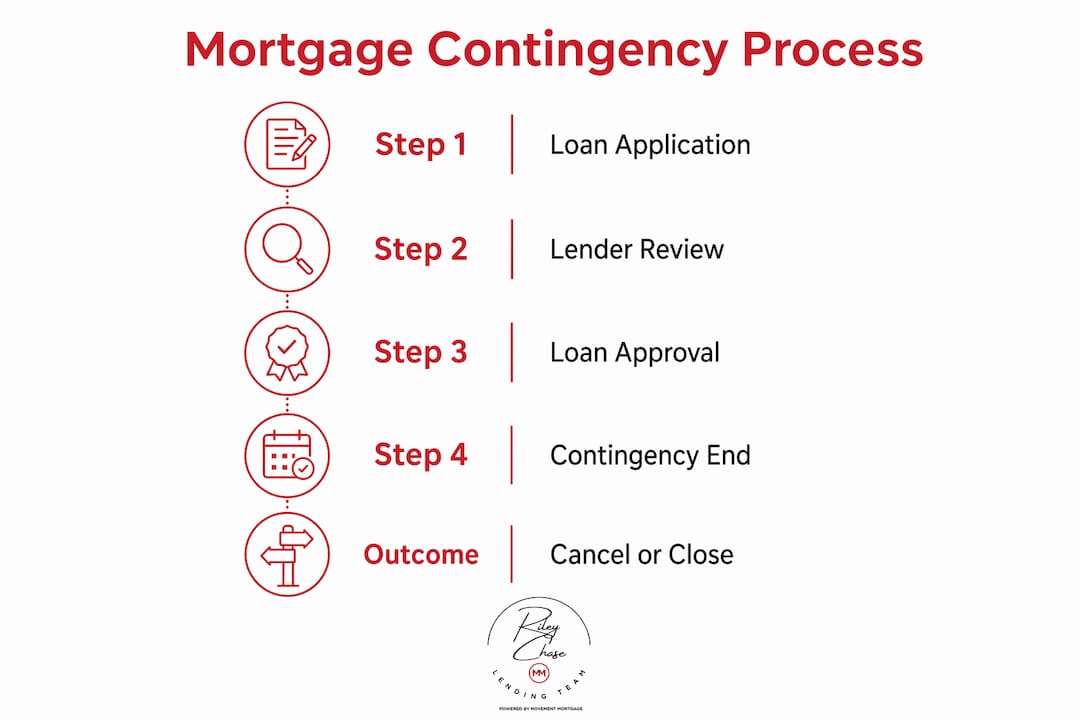
A mortgage contingency is a clause in a real estate purchase contract that lets you walk away from a home sale and recover your earnest money deposit if you cannot secure financing under the agreed terms. Also called a financing contingency, this clause is one of the most important protections you have as a buyer. Earnest money deposits typically range from 1% to 10% of the purchase price. That is a significant sum to lose if your loan falls through without this protection in place. Understanding what is a mortgage contingency before you sign any contract puts you in a far stronger position.
What is a mortgage contingency and how does it work?
A mortgage contingency clause is written directly into your purchase agreement as a condition of the sale. The sale only moves forward if you successfully obtain a mortgage that meets the terms spelled out in the contract. If you cannot get that loan by the deadline, you have the legal right to cancel the deal and get your earnest money back.
Mortgage contingency clauses typically specify three key loan parameters:
- Loan amount: The minimum amount you need to borrow to complete the purchase.
- Interest rate cap: The highest interest rate you are willing to accept. If lenders only offer rates above this cap, the contingency is triggered.
- Loan type: Whether you are seeking a conventional, FHA, VA, or another loan type.
These specifics matter because they define the exact conditions under which you can exit the contract without penalty. A vague contingency clause creates room for disputes, so work with your real estate agent to make sure every term is clearly defined.
One critical point: buyers must act in good faith to secure their loan during the contingency period. You cannot simply stop communicating with lenders and then claim the contingency to escape the deal. Courts have ruled against buyers who used the contingency improperly. Genuine effort to obtain financing is a legal requirement, not just a courtesy.

Pro Tip: Ask your lender to provide written documentation of any loan denial. This protects you if the seller disputes your right to cancel under the contingency clause.
What is the typical timeline for a mortgage contingency?
The contingency period is the window of time you have to secure your financing. Mortgage contingency periods typically last between 14 and 60 days, depending on the market and the complexity of your loan.
Several factors shape how long your contingency period should be:
- Market conditions. In competitive markets, sellers prefer shorter contingency windows. A 14- to 21-day period signals confidence and keeps your offer attractive.
- Loan type. FHA and VA loans often require more processing time than conventional loans, so buyers using these programs may need a longer window.
- Pre-approval status. Buyers who are already pre-approved for a mortgage can often negotiate a shorter contingency period because much of the underwriting work is already done.
- Closing date. The contingency deadline must fall before your scheduled closing date. Most buyers set the deadline one to two weeks before closing to allow time for any last-minute issues.
| Market Type | Typical Contingency Length | Key Consideration |
|---|---|---|
| Hot/competitive | 14–21 days | Shorter period strengthens offer |
| Moderate | 21–30 days | Balanced protection and appeal |
| Slower/buyer’s market | 30–60 days | More time to secure financing |
If you need more time, extension clauses can be negotiated with the seller’s agreement. Not every seller will agree to an extension, but it is worth asking rather than letting the deadline pass without a loan commitment in hand.
Pro Tip: Set a calendar reminder five days before your contingency deadline. That buffer gives you time to request an extension or make a final push with your lender before the window closes.
What are the benefits and risks of a mortgage contingency?
The mortgage contingency clause is your financial safety net. Without it, losing your loan approval means losing your earnest money too. With it, you have a defined exit path that costs you nothing but time.
Benefits for buyers
- Earnest money protection. If your financing falls through for a legitimate reason, you recover your deposit in full.
- Defined loan terms. The interest rate cap and loan type specifications mean you are not locked into a loan that no longer makes financial sense.
- Negotiating leverage. You can use the contingency period to shop lenders and find the best rate without fear of losing the deal.
- Peace of mind. You can move forward with inspections, appraisals, and planning without betting everything on a loan that is not yet final.
Risks and trade-offs
Sellers often view mortgage contingencies as deal risks that could delay or derail closing. In a competitive market, a seller with multiple offers may choose a buyer with fewer contingencies or a shorter window. That is a real trade-off you need to weigh.
Some buyers consider waiving the mortgage contingency to make their offer more competitive. This is a high-risk move. If your loan falls through after waiving the contingency, you lose your earnest money with no legal recourse. Only consider waiving if you have strong cash reserves and absolute certainty about your financing.
The most common misconception among first-time buyers is that pre-approval eliminates the need for a mortgage contingency. Pre-approval is a lender’s preliminary assessment, not a guarantee. Your financial situation, the property’s appraisal, or lender underwriting standards can all change between pre-approval and closing. The contingency protects you from exactly those scenarios.
How to manage a mortgage contingency effectively
Managing your contingency period well is the difference between a smooth closing and a stressful scramble. Follow these steps to stay on track.
- Submit your full mortgage application immediately. Do not wait until after the contract is signed. Apply the same day or the next business day. Every day counts toward your deadline.
- Respond to lender requests within 24 hours. Underwriters frequently ask for additional documents. Slow responses are the most common reason contingency periods run long. Review the dos and don’ts of applying before you start.
- Keep your seller’s agent informed. If your loan is progressing well, say so. Sellers feel more confident when they hear regular updates. Silence breeds anxiety and sometimes leads sellers to explore backup offers.
- Avoid major financial changes. Do not open new credit accounts, make large purchases, or change jobs during the contingency period. Any of these can trigger a new round of underwriting or even a loan denial.
- Document everything. Save every email, letter, and loan estimate from your lender. If a dispute arises over whether you acted in good faith, written records are your best defense.
- Know your exit deadline. If you decide to cancel, you must do so before the contingency expires. Missing the deadline, even by one day, can cost you your earnest money.
Pro Tip: Walk through the full mortgage approval process before you make an offer. Knowing what lenders look for helps you move faster once the clock starts.
Key Takeaways
A mortgage contingency clause is the single most important financial protection a buyer can include in a purchase contract, and waiving it without strong financial certainty is rarely worth the risk.
| Point | Details |
|---|---|
| Core definition | A mortgage contingency lets you cancel and recover earnest money if financing falls through by the deadline. |
| Clause specifics | The clause must name the loan amount, interest rate cap, and loan type to be enforceable. |
| Timeline range | Contingency periods run 14–60 days; competitive markets favor shorter windows of 14–21 days. |
| Pre-approval misconception | Pre-approval does not replace a contingency; final loan approval can still be denied after pre-approval. |
| Good faith requirement | Buyers must genuinely pursue financing; using the contingency to escape a deal without real effort can lead to legal disputes. |
Why I think first-time buyers underestimate this clause
Most first-time buyers I talk with treat the mortgage contingency as a formality. They sign off on it without reading the loan type, the rate cap, or the deadline. That is a mistake that can cost thousands of dollars.
The buyers who use contingencies well treat the period like a sprint, not a waiting room. They submit documents the same day they go under contract. They call their lender every few days. They know their deadline the way they know their closing date.
I have also seen buyers waive the contingency to win a bidding war and then panic when their appraisal came in low and their lender reduced the loan amount. Without the contingency, they had no exit. They either had to come up with extra cash or lose their deposit. Neither option felt like a win.
The contingency is not a sign of weakness in your offer. It is a sign that you understand the process. Experienced buyers balance contingency length to stay competitive while staying protected. That balance is something you can negotiate, not something you have to accept or reject in full. Be transparent with the seller, keep your window tight if your pre-approval is solid, and never treat this clause as optional.
— Riley
Rileychase can help you move forward with confidence
Buying your first home is a big step, and having the right financing foundation makes all the difference. Rileychase works with first-time buyers to clarify every step of the process, from understanding contingency clauses to finding the right loan type for your situation.
Getting pre-approved for a home loan before you make an offer gives you real leverage. It shortens your contingency window, strengthens your offer, and gives you a clear picture of what you can afford. Rileychase offers loan options across fixed-rate, FHA, VA, and adjustable-rate programs, so you can match your financing to your goals. Reach out to the Rileychase team today and get the clarity you need before you sign anything.
FAQ
What is a mortgage contingency in simple terms?
A mortgage contingency is a clause in a home purchase contract that lets you cancel the deal and get your earnest money back if you cannot secure a mortgage by a set deadline.
How long does a mortgage contingency period last?
Contingency periods typically run between 14 and 60 days. Competitive markets favor shorter windows of 14 to 21 days, while slower markets allow 30 to 60 days.
Does pre-approval mean I don’t need a mortgage contingency?
Pre-approval does not guarantee final loan approval. Lenders can still deny a loan after pre-approval based on underwriting changes, appraisal results, or shifts in your financial profile, so the contingency remains critical.
Can a seller reject an offer because of a mortgage contingency?
Yes. Sellers can favor offers with shorter contingency periods or no contingency at all. In competitive markets, a shorter window supported by strong pre-approval documentation makes your offer more appealing.
What happens if the mortgage contingency deadline passes without a loan?
If the deadline passes and you have not secured financing or requested an extension, you may lose your right to cancel penalty-free. Missing the deadline without action can cost you your earnest money deposit.
Recommended
- Demystifying the Mortgage Approval Process: A Step-by-Step Guide for First-Time Homebuyers – Movement Mortgage
- Mortgage Terms Every Buyer Knows: First-Timer’s Guide
- First-Time Homebuyer’s Checklist – Movement Mortgage
- How to Navigate the Homebuying Process: A Step-by-Step Guide for First-Time Buyers – Movement Mortgage

Related Posts