
Discover why investor mortgage rates are higher. Learn about the risks that affect loan costs and how to negotiate better terms.
Why Pre-Approval Strengthens Your Purchase Offer
Mortgage pre-approval is a lender-verified conditional commitment that signals to sellers you have the financial ability to close a deal. Understanding why pre-approval strengthens your purchase offer gives you a real edge in competitive markets, where sellers routinely choose certainty over the highest bid. Pre-approval goes beyond a simple estimate. It requires a hard credit pull, income verification, and asset review, making it far more credible than pre-qualification. With mortgage application rejection rates reaching 20.7% in 2024, sellers have every reason to favor buyers who have already cleared lender scrutiny.
How does pre-approval strengthen your purchase offer?
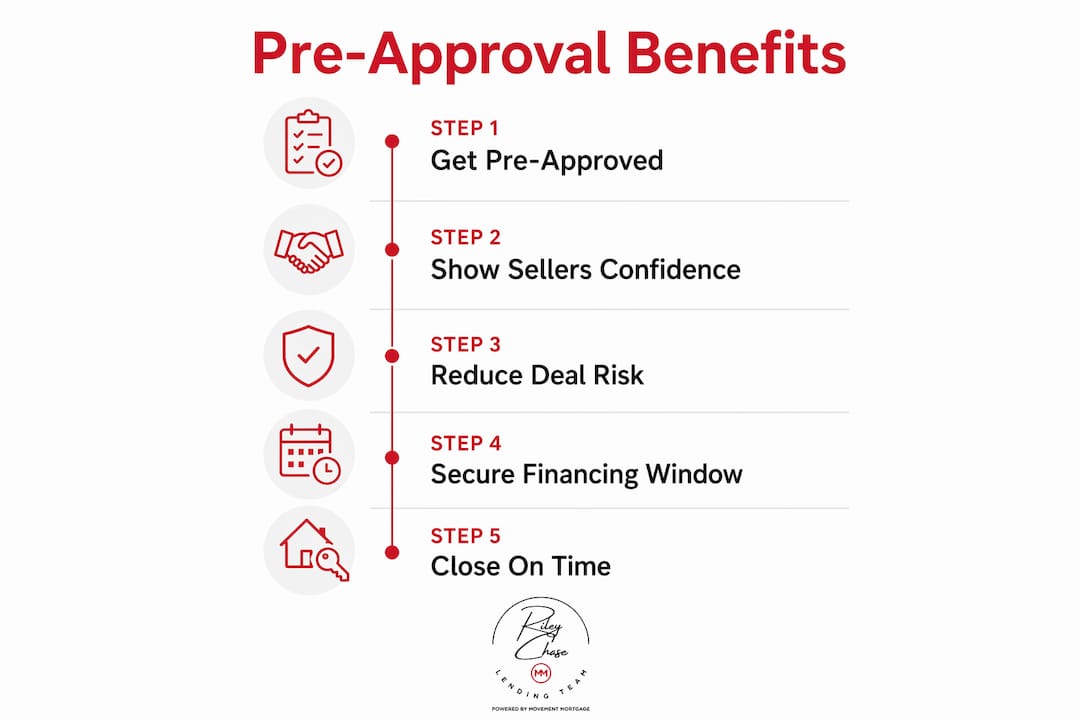
A pre-approval letter transforms your offer from a hopeful request into a credible, actionable plan. Sellers see it as proof that a lender has reviewed your finances and found you capable of completing the purchase. That verification covers three core areas: your credit score, your income and employment history, and your assets. Each step reduces the seller’s risk that the deal will fall apart before closing.
Financing failures cause 5–10% of deal collapses, and every failed deal costs the seller time, relisting fees, and potential market value loss. A pre-approval letter directly addresses that fear. Sellers and their listing agents know that a buyer with verified financing is far less likely to back out due to loan denial.

Pre-qualification, by contrast, is a self-reported estimate. No documents are verified, no credit pull occurs, and no lender has committed to anything. The difference matters enormously when a seller is weighing two offers side by side.
Here is what a strong pre-approval letter signals to a seller:
- Verified income and employment: The lender has confirmed you earn what you claim.
- Reviewed credit history: A hard inquiry has been completed, and your credit profile has been assessed.
- Confirmed asset reserves: The lender knows you have funds for a down payment and closing costs.
- Defined loan amount: The seller knows exactly how much financing you can access.
- Lender commitment: A real financial institution has reviewed your file and issued a conditional approval.
Each of these points reduces uncertainty. Sellers prefer offers that are likely to close on time, and pre-approval is the clearest signal you can send.
What are the practical benefits of pre-approval in competitive markets?
Pre-approval gives you concrete advantages that go well beyond paperwork. In markets where multiple offers arrive within days of a listing, being pre-approved lets you act immediately and with confidence.
Here are the key practical benefits, ranked by impact:
- Speed to offer. You can submit an offer the same day you find the right home. Buyers without pre-approval lose days gathering documents while the home goes under contract.
- Negotiation strength. Sellers often prefer a lower offer backed by strong pre-approval over a higher offer with only pre-qualification. Certainty has real monetary value.
- Shorter financing contingency. Because the lender has already reviewed your file, you can offer a tighter contingency window. That appeals to sellers who want a fast, clean close.
- Faster closing timeline. Much of the underwriting work is done before you even find a home. That compresses the time from signed contract to closing day.
- Clear budget boundaries. You know your exact price ceiling before you start touring homes. That focus saves time and prevents the disappointment of falling in love with a home you cannot finance.
Pro Tip: Get pre-approved before you attend your first open house. Competitive listings can receive offers within 24 hours of hitting the market. Having your letter ready means you never miss a window.
Pre-approval letters are typically valid for 60–120 days, which gives you a solid window to shop. If your search runs longer, you can renew the letter with updated documents. The process is faster the second time because your lender already knows your financial profile.
Some competitive markets now require pre-approval even to schedule showings. That shift reflects how central financing readiness has become to the entire buying process, not just the offer stage.
What misconceptions about pre-approval should buyers know?
Several common fears stop buyers from getting pre-approved early. Most of those fears are based on myths. Clearing them up puts you in a stronger position.
- “Pre-approval will hurt my credit score.” A hard inquiry causes a temporary dip of fewer than 5 points, and that dip reverses within a couple of months. The benefit of a strong offer far outweighs a minor, short-lived score change.
- “I’m locked into one lender.” Getting pre-approved by one lender does not obligate you to use them. You can and should compare lenders before committing.
- “Multiple applications will destroy my score.” Multiple mortgage inquiries within a 14–45 day window count as a single inquiry for scoring purposes. You can shop freely without stacking credit damage.
- “Pre-approval means I’m guaranteed a loan.” Pre-approval is conditional. If your financial situation changes before closing, the lender can withdraw the commitment.
Pro Tip: After receiving your pre-approval, avoid opening new credit accounts, making large purchases, or changing jobs. Any of those moves can trigger a re-review and put your approval at risk.
The biggest real risk is not the credit inquiry. It is financial instability after approval. Buyers who take on new car loans, change employers, or run up credit card balances between pre-approval and closing have lost their financing at the final stage. Treat your pre-approval like a contract with yourself to stay financially steady until the keys are in your hand.
How do sellers and listing agents evaluate a pre-approval letter?
Not all pre-approval letters carry equal weight. Experienced listing agents read them carefully and can tell the difference between a thorough lender review and a surface-level check.
Listing agents look for specific indicators of depth. A basic pre-approval letter states an approved amount and a loan type. A stronger letter includes verified debt-to-income ratios, confirmed employment, and documented asset reserves. The strongest letters come from underwritten pre-approvals, where nearly 90% of underwriting is completed before the buyer even selects a home. That level of scrutiny gives sellers the highest confidence in closing likelihood.
| Letter type | What it includes | Seller confidence level |
|---|---|---|
| Pre-qualification letter | Self-reported income, no verification | Low |
| Standard pre-approval | Credit pull, basic income review | Moderate |
| Underwritten pre-approval | Full underwriting before home selection | High |
Lender reputation also matters. A letter from a well-known, reputable lender carries more weight than one from an unfamiliar source. Listing agents’ experience reading these letters directly influences which offers get accepted, especially when two offers are close in price. When sellers face a choice, the buyer with the more credible financing document wins.
Key Takeaways
Mortgage pre-approval strengthens your purchase offer by giving sellers verified proof of your financing ability, reducing their risk, and increasing your negotiation power.
| Point | Details |
|---|---|
| Pre-approval beats pre-qualification | Sellers trust verified lender review over self-reported estimates every time. |
| Credit impact is minimal | A hard inquiry drops your score fewer than 5 points and recovers within months. |
| Underwritten letters win | Full underwriting before home selection gives sellers the highest closing confidence. |
| Financial stability matters post-approval | Avoid new debt, large purchases, or job changes until closing day. |
| Speed is a real advantage | Pre-approved buyers can submit offers immediately, before unverified buyers gather documents. |
What I’ve learned from watching buyers win and lose on pre-approval
I have watched buyers lose homes they genuinely loved, not because their offer was too low, but because their financing looked uncertain. A seller with two offers on the table will almost always choose the one that feels like a sure thing. Pre-approval is how you become that sure thing.
The buyers who struggle are usually the ones who treat pre-approval as a formality to handle after they find a home. By then, it is too late. The prepared buyer already has their letter, knows their budget, and can move within hours of a listing going live. That preparation is not luck. It is a decision made weeks before the right home appears.
I also want to address the credit score fear directly, because it stops too many buyers from acting. A 3-point dip on your credit score is not a reason to delay. The cost of losing a home to a more prepared buyer is far greater than a temporary, minor score change. Read through the common mortgage myths that hold buyers back, and you will see this pattern repeated across every stage of the process.
The buyers who succeed treat pre-approval as the starting line, not the finish line. They get approved, stay financially disciplined, and show up to every offer with confidence. That mindset, more than any single tactic, is what wins homes in competitive markets.
— Riley
Your next step toward a stronger home offer
Getting pre-approved is the single most effective step you can take before making an offer on a home. Rileychase makes that process clear, personal, and straightforward for first-time buyers and experienced buyers alike.
The 5-step financial preparation guide at Rileychase walks you through exactly what lenders review, how to position your finances for approval, and what to do after your letter arrives. You will also find expert guidance on improving your approval chances if your credit or income needs attention before you apply. Rileychase is here to support you at every step, with transparent advice and no pressure.
FAQ
What is the difference between pre-approval and pre-qualification?
Pre-qualification is a self-reported estimate with no document verification. Pre-approval involves a hard credit pull and lender review of your income and assets, making it far more credible to sellers.
How long does a mortgage pre-approval last?
Pre-approval letters are typically valid for 60–120 days. If your home search runs longer, you can renew the letter with updated financial documents.
Does getting pre-approved hurt your credit score?
A hard inquiry causes a temporary drop of fewer than 5 points, which recovers within a couple of months. Multiple mortgage inquiries within a 14–45 day window count as a single inquiry.
Can a seller reject an offer even with pre-approval?
Yes. Sellers weigh price, terms, and financing strength together. An underwritten pre-approval from a reputable lender gives you the strongest position, but sellers retain full discretion.
What can void a pre-approval before closing?
Taking on new debt, changing jobs, or making large purchases after pre-approval can trigger a re-review and result in loan denial. Maintaining financial stability between approval and closing is critical.
Recommended

Related Posts